
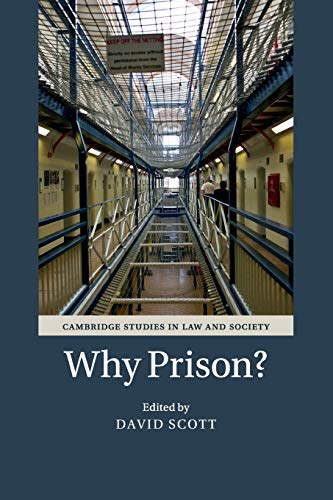
Why Prison ?
Publication details: Cambridge University Press , 2015. United Kingdom :Description: 408, ppISBN:- 9781107521803
- 365 WHY-
| Cover image | Item type | Current library | Home library | Collection | Shelving location | Call number | Materials specified | Vol info | URL | Copy number | Status | Notes | Date due | Barcode | Item holds | Item hold queue priority | Course reserves | |
|---|---|---|---|---|---|---|---|---|---|---|---|---|---|---|---|---|---|---|
 Books
Books
|
NASSDOC Library | 365 WHY- (Browse shelf(Opens below)) | Available | 51559 |
Prison studies has experienced a period of great creativity in recent years, and this collection draws together some of the field's most exciting and innovative contemporary critical writers in order to engage directly with one of the most profound questions in penology - why prison? In addressing this question, the authors connect contemporary penological thought with an enquiry that has received the attention of some of the greatest thinkers on punishment in the past. Through critical exploration of the theories, policies and practices of imprisonment, the authors analyse why prison persists and why prisoner populations are rapidly rising in many countries. Collectively, the chapters provide not only a sophisticated diagnosis and critique of global hyper-incarceration but also suggest principles and strategies that could be adopted to radically reduce our reliance upon imprisonment.
There are no comments on this title.