
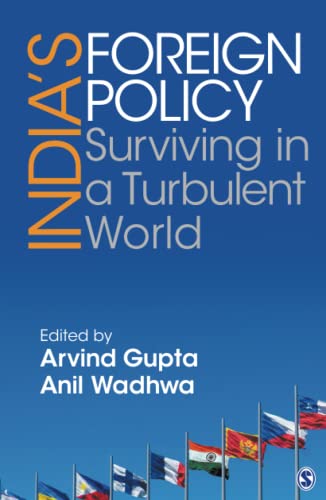
India’s Foreign Policy/ Edited by Arvind Gupta, Anil Wadhwa
Publication details: London Sage Publication 2020Description: 440p. IndexISBN:- 9789353882952
- 327.5 INA-
| Cover image | Item type | Current library | Home library | Collection | Shelving location | Call number | Materials specified | Vol info | URL | Copy number | Status | Notes | Date due | Barcode | Item holds | Item hold queue priority | Course reserves | |
|---|---|---|---|---|---|---|---|---|---|---|---|---|---|---|---|---|---|---|
 Books
Books
|
NASSDOC Library | 327.5 INA- (Browse shelf(Opens below)) | Available | 54374 |
India's foreign policy is characterized by its strategic pragmatism, based on its historical principles of non-alignment, sovereignty, and peaceful coexistence. The policy has evolved over time to reflect changing global dynamics, with an emphasis on maintaining national security, fostering economic growth, and asserting India's influence on the global stage.
India seeks to balance relations with major powers like the United States, Russia, and China, while prioritizing its regional interests, especially in South Asia. Its foreign policy also emphasizes multilateralism, with India being an active member of international organizations such as the United Nations, BRICS, and the G20. Additionally, India plays a significant role in global issues like climate change, development, and security, aiming for a more equitable global order.
India’s foreign policy has adapted to new challenges, including terrorism, regional instability, and competition in the Indo-Pacific region. Its "Neighborhood First" policy aims to strengthen ties with neighboring countries, while its "Act East" policy focuses on enhancing relations with Southeast Asia and East Asia. Ultimately, India's foreign policy seeks to ensure national security, economic prosperity, and a stable global environment.
There are no comments on this title.