
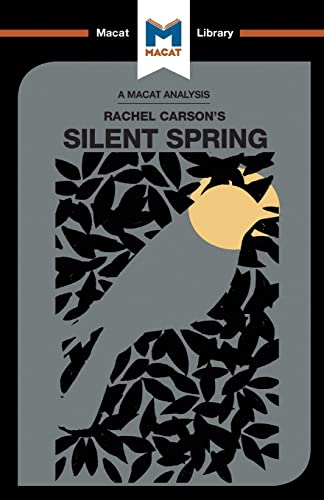
Analysis of Rachel Carson's - silent spring
Publication details: London Routledge 2017 Description: 88pISBN:- 9781912127450
- 363.7384 SPR-A
| Cover image | Item type | Current library | Home library | Collection | Shelving location | Call number | Materials specified | Vol info | URL | Copy number | Status | Notes | Date due | Barcode | Item holds | Item hold queue priority | Course reserves | |
|---|---|---|---|---|---|---|---|---|---|---|---|---|---|---|---|---|---|---|
 Books
Books
|
NASSDOC Library | 363.7384 SPR-A (Browse shelf(Opens below)) | Available | 50327 |
Browsing NASSDOC Library shelves Close shelf browser (Hides shelf browser)

|

|
|

|

|

|

|
||
| 363.7380951 CLI- Climate Risk and Resilience in China | 363.7380954 MIS-C CSR Hazardous Sector : | 363.7380954 MIS-C CSR Hazardous Sector : | 363.7384 SPR-A Analysis of Rachel Carson's - silent spring | 363.7387 BUC-E Ending fossil fuels : | 363.7387 THO-C Climate of Capitulation | 363.73874 BAI-; US climate change policy |
Rachel Carson’s 1962 Silent Spring is one of the few books that can claim to be epoch-making. Its closely reasoned attack on the use of pesticides in American agriculture helped thrust environmental consciousness to the fore of modern politics and policy, creating the regulatory landscape we know today. The book is also a monument to the power of closely reasoned argument – built from well organised and carefully evidenced points that are not merely persuasive but designed to be irrefutable. Indeed, it had to be: upon its publication, the chemical industry utilised all its resources to attempt to discredit both Silent Spring and Carson herself – to no avail. The central argument of the book is that the indiscriminate use of pesticides encouraged by post-war advances in agriculture and chemistry was deeply harmful to plants, animals and the whole environment, with devastating effects that went far beyond protecting crops.
There are no comments on this title.