
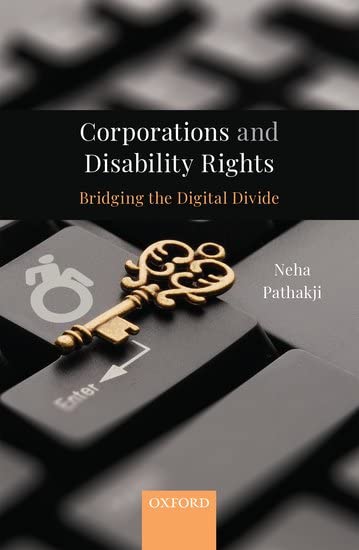
Corporations and disability rights : bridging the digital divide
Publication details: Oxford University Press 2018 New DelhiDescription: xxv, 331pISBN:- 9780199485239
- 004.087 PAT-C
| Cover image | Item type | Current library | Home library | Collection | Shelving location | Call number | Materials specified | Vol info | URL | Copy number | Status | Notes | Date due | Barcode | Item holds | Item hold queue priority | Course reserves | |
|---|---|---|---|---|---|---|---|---|---|---|---|---|---|---|---|---|---|---|
 Books
Books
|
NASSDOC Library | 004.087 PAT-C (Browse shelf(Opens below)) | Available | 50912 |
Include Bibliography and Index
This book explores the interplay between the human rights of persons with disabilities and corporate obligation towards the creation of an inclusive and accessible Internet. It engages with the contemporary discourse on the nature of the right to access the Internet and contextualizes the same within the framework of emerging disability rights jurisprudence. It articulates that the existing digital divide is an extension of social injustice to persons with disabilities from the physical world to the virtual world. It is argued that conceptualizing the right to access the Internet as merely an enabling right is oversimplifying an otherwise complex issue. The book advances the argument that under disability rights jurisprudence, the right to access the Internet is a human right. In this context, it questions the role of corporations as gatekeepers of the virtual world and investigates the extent and scope of corporate human rights obligations. The book offers a pioneering strategy to obtain compliance from corporations.
etc.
There are no comments on this title.