
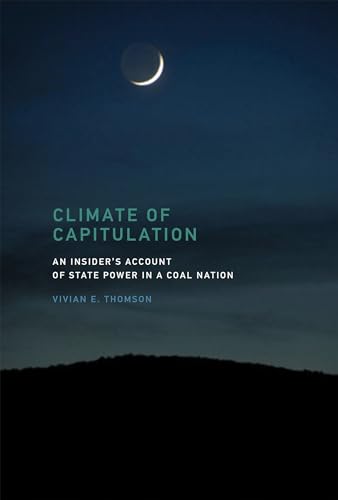
Climate of Capitulation : An Insider's Account of State Power in A Coal Nation
Publication details: 2017 Cambridge MIT PressDescription: ix, 242pISBN:- 9780262036344
- 363.7387 THO-C
| Cover image | Item type | Current library | Home library | Collection | Shelving location | Call number | Materials specified | Vol info | URL | Copy number | Status | Notes | Date due | Barcode | Item holds | Item hold queue priority | Course reserves | |
|---|---|---|---|---|---|---|---|---|---|---|---|---|---|---|---|---|---|---|
 Books
Books
|
NASSDOC Library | 363.7387 THO-C (Browse shelf(Opens below)) | Available | 50978 |
Browsing NASSDOC Library shelves Close shelf browser (Hides shelf browser)

|

|

|

|

|

|

|
||
| 363.7380954 MIS-C CSR Hazardous Sector : | 363.7384 SPR-A Analysis of Rachel Carson's - silent spring | 363.7387 BUC-E Ending fossil fuels : | 363.7387 THO-C Climate of Capitulation | 363.73874 BAI-; US climate change policy | 363.73874 BRI- City and the coming climate: climate change in the places we live | 363.73874 BUL-L Living with climate change: |
Include Bibliography and Index
How power is wielded in environmental policymaking at the state level, and how to redress the ingrained favouritism toward coal and electric utilities. The United States has pledged to the world community a reduction in greenhouse gas emissions by 26-28 per cent below 2005 levels in 2025. Because much of this reduction must come from electric utilities, especially coal-fired power plants, coal states will make or break the U.S. commitment to emissions reduction. In Climate of Capitulation, Vivian Thomson offers an insider's account of how power is wielded in environmental policymaking at the state level. Thomson, a former member of Virginia's State Air Pollution Control Board, identifies a "climate of capitulation" in state government--a deeply rooted favouritism toward coal and electric utilities in states' air pollution policies. Thomson narrates three cases involving coal and air pollution from her time on the Air Board. She illuminates the overt and covert power struggles surrounding air pollution limits for a coal-fired power plant just across the Potomac from Washington, for a controversial new coal-fired electrical generation plant in coal country, and for coal dust pollution from truck traffic in a country hollow. Thomson links Virginia's climate of capitulation with campaign donations that make legislators politically indebted to coal and electric utility interests, a traditionalistic political culture tending to inertia and a part-time legislature that depended on outside groups for information and bill drafting. Extending her analysis to fifteen other coal-dependent states, Thomson offers policy reforms aimed at mitigating the ingrained biases toward coal and electric utilities in states' air pollution policymaking.
There are no comments on this title.