
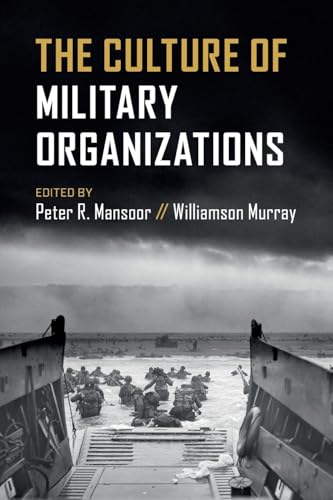
Culture Of Military Organizations
Publication details: United Kingdom Cambridge University Press 2019Description: x,473pISBN:- 9781108724487
- 306.27 CUL-
| Cover image | Item type | Current library | Home library | Collection | Shelving location | Call number | Materials specified | Vol info | URL | Copy number | Status | Notes | Date due | Barcode | Item holds | Item hold queue priority | Course reserves | |
|---|---|---|---|---|---|---|---|---|---|---|---|---|---|---|---|---|---|---|
 Books
Books
|
NASSDOC Library | 306.27 CUL- (Browse shelf(Opens below)) | Available | 51466 |
Browsing NASSDOC Library shelves Close shelf browser (Hides shelf browser)


includes index
Culture has an enormous influence on military organizations and their success or failure in war. Cultural biases often result in unstated assumptions that have a deep impact on the making of strategy, operational planning, doctrinal creation, and the organization and training of armed forces. Except in unique circumstances culture grows slowly, embedding so deeply that members often act unconsciously according to its dictates. Of all the factors that are involved in military effectiveness, culture is perhaps the most important. Yet, it also remains the most difficult to describe and understand, because it entails so many external factors that impinge, warp, and distort its formation and continuities. The sixteen case studies in this volume examine the culture of armies, navies, and air forces from the Civil War to the Iraq War and how and why culture affected their performance in the ultimate arbitration of war.
There are no comments on this title.