
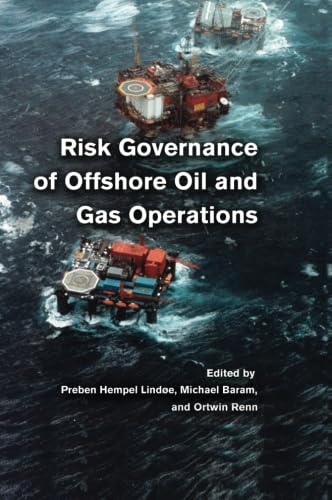
Risk Governance of Offshore Oil and Gas Operations
Publication details: Cambridge University Press 2015Description: 452, ppISBN:- 9781107515260
- 622.3381906 RIS-
| Cover image | Item type | Current library | Home library | Collection | Shelving location | Call number | Materials specified | Vol info | URL | Copy number | Status | Notes | Date due | Barcode | Item holds | Item hold queue priority | Course reserves | |
|---|---|---|---|---|---|---|---|---|---|---|---|---|---|---|---|---|---|---|
 Books
Books
|
NASSDOC Library | 622.3381906 RIS- (Browse shelf(Opens below)) | Available | 51542 |
Browsing NASSDOC Library shelves Close shelf browser (Hides shelf browser)

|

|
No cover image available |

|

|

|

|
||
| 621.3815 Electromigration in metals : | 621.382 VER-E Economics of Telecommunication Services : | 621.48 INT- Internationalization to prevent the spread of nuclear weapons | 622.3381906 RIS- Risk Governance of Offshore Oil and Gas Operations | 623.09310954 AGN-L Leveraging high-technology developments in the Chinese military and maritime domains : | 625.70954 SIM-H Highways to the End of the World: | 627.1309545 RAN-B Bhakra-Nangal Project: socio-economic and environmental impacts |
This book evaluates and compares risk regulation and safety management for offshore oil and gas operations in the United States, the United Kingdom, Norway and Australia. It provides an interdisciplinary approach with legal, technological and sociological perspectives on efforts to assess and prevent major accidents and improve safety performance. Presented in three parts, it begins with a review of the factors involved in designing, implementing and enforcing a regulatory regime for industrial safety. It then evaluates the four regimes exploring the contextual factors that influence their design and implementation, their reliance on industrial expertise and standards, and the use of performance indicators. Finally the book assesses the resilience of the Norwegian regime, its capacity to keep pace with new technologies and emerging risks, respond to near miss incidents, encourage safety culture, incorporate vested rights of labor, and perform inspection and self-audit functions. This book is relevant for those in government, business and academia, and anyone involved in offshore safety issues.
There are no comments on this title.