
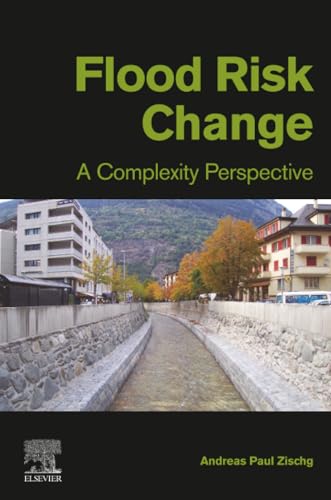
Flood risk change : a complexity perspective / Andreas Paul Zischg
Language: eng- Publication details: Netherlands : Elsevier, 2023.Description: xii, 302pISBN:- 9780128220115
- 627.4 ZIS-F
| Cover image | Item type | Current library | Home library | Collection | Shelving location | Call number | Materials specified | Vol info | URL | Copy number | Status | Notes | Date due | Barcode | Item holds | Item hold queue priority | Course reserves | |
|---|---|---|---|---|---|---|---|---|---|---|---|---|---|---|---|---|---|---|
 Books
Books
|
NASSDOC Library | 627.4 ZIS-F (Browse shelf(Opens below)) | Available | 52947 |
Includes bibliographical references and index.
Flood Risk Change: A Complexity Perspective focuses on the dynamic nature of flood risks and follows a systemic approach - including environmental, socioeconomic and socio-technical factors for modeling and managing flood risk change. Readers will gain a more complete picture of the topic for understanding the complexity of flood risk change, both from human and natural causes of flooding. The book includes a mix of theory (introduction to complex system science from the flood risk management perspective) and case studies. It features maps and figures focusing on the system components as well as on the dynamic interactions between the drivers of change.
Researchers studying flood risk, environmental engineering, disaster risk reduction, and land use, as well as those in industry and responsible for policy, will find this an invaluable resource.
English.
There are no comments on this title.