
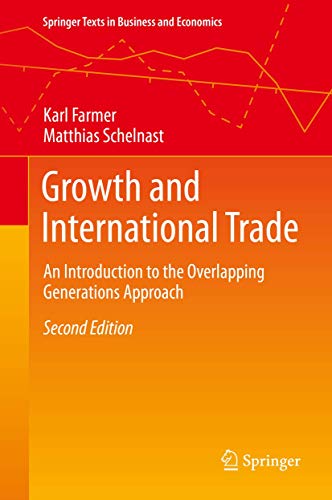
Growth and International Trade: An Introduction to the Overlapping Generations Approach/ Karl Farmer and Matthias Schelnast
Publication details: Germany: Springer, 2021.Edition: 2ndDescription: xxi, 588pISBN:- 9783662629420
- 338.9001 FAR-G
| Cover image | Item type | Current library | Home library | Collection | Shelving location | Call number | Materials specified | Vol info | URL | Copy number | Status | Notes | Date due | Barcode | Item holds | Item hold queue priority | Course reserves | |
|---|---|---|---|---|---|---|---|---|---|---|---|---|---|---|---|---|---|---|
 Books
Books
|
NASSDOC Library | 338.9001 FAR-G (Browse shelf(Opens below)) | Available | 54341 |
Browsing NASSDOC Library shelves Close shelf browser (Hides shelf browser)


This textbook guides the reader towards various aspects of growth and international trade in a Diamond-type overlapping generations framework. Using the same model type throughout the book, timely topics such as growth with bubbles, debt reduction in rich countries and policies to mitigate climate change are explored . The first part starts from the “old” growth theory and bridges to the “new” growth theory (including R&D and human capital approaches). The second part presents an intertemporal equilibrium theory of inter and intra-sectoral trade and concludes by analyzing the debt mechanics inducing the huge imbalances among eurozone countries. The book is primarily addressed to graduate students wishing to proceed to the analytically more demanding journal literature.
There are no comments on this title.