
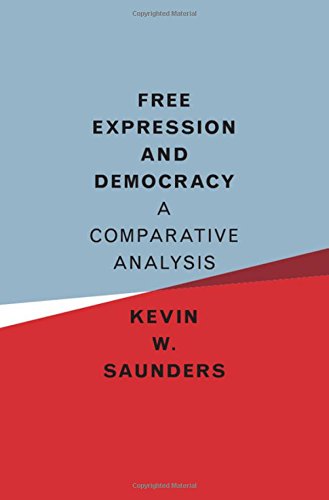
Free Expression and Democracy : A Comparative Analysis
Publication details: Cambridge Cambridge University Press 2017Description: x, 379pISBN:- 9781107171978
- RR 323.443 SAU-F
| Cover image | Item type | Current library | Home library | Collection | Shelving location | Call number | Materials specified | Vol info | URL | Copy number | Status | Notes | Date due | Barcode | Item holds | Item hold queue priority | Course reserves | |
|---|---|---|---|---|---|---|---|---|---|---|---|---|---|---|---|---|---|---|
 Reference Books
|
NASSDOC Library | RR 323.443 SAU-F (Browse shelf(Opens below)) | Not For Loan | 49834 |
Browsing NASSDOC Library shelves Close shelf browser (Hides shelf browser)
| No cover image available | No cover image available |

|

|

|

|
No cover image available | ||
| RR 323.03 STU- International encyclopaedia of human rights: Study stories of human rights | RR 323.03 STU- International encyclopaedia of human rights: Study stories of human rights | RR 323.403 LAW-E Encyclopedia of human rights | RR 323.443 SAU-F Free Expression and Democracy | RR323.6 KAL-C Citizenship | RR 324.03 INT- International encyclopedia of election | RR 324.0954 BUT-I India decides: elections 1952-1989 |
includes index
Free Expression and Democracy takes on the assumption that limits on free expression will lead to authoritarianism or at least a weakening of democracy. That hypothesis is tested by an examination of issues involving expression and their treatment in countries included on The Economist's list of fully functioning democracies. Generally speaking, other countries allow prohibitions on hate speech, limits on third-party spending on elections, and the protection of children from media influences seen as harmful. Many ban Holocaust denial and the desecration of national symbols. Yet, these other countries all remain democratic, and most of those considered rank more highly than the United States on the democracy index. This book argues that while there may be other cultural values that call for more expansive protection of expression, that protection need not reach the level present in the United States in order to protect the democratic nature of a country.
There are no comments on this title.