
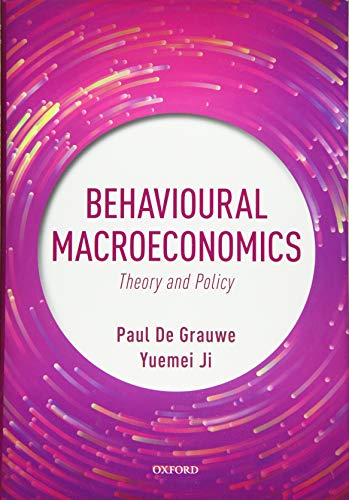
Behavioural Macroeconomics : Theory and Policy
Publication details: Oxford University Press United Kingdom 2019Description: xi, 260pISBN:- 9780198832324
- 339.019 GRA-B
| Cover image | Item type | Current library | Home library | Collection | Shelving location | Call number | Materials specified | Vol info | URL | Copy number | Status | Notes | Date due | Barcode | Item holds | Item hold queue priority | Course reserves | |
|---|---|---|---|---|---|---|---|---|---|---|---|---|---|---|---|---|---|---|
 Books
Books
|
NASSDOC Library | 339.019 GRA-B (Browse shelf(Opens below)) | Available | 51264 |
Modern macroeconomics has been based on the paradigm of the rational individual capable of understanding the complexity of the world. This has created a very shallow theory of the business cycle in which nothing happens in the macroeconomy unless shocks occur from outside. Behavioural Macroeconomics: Theory and Policy uses a different paradigm. It assumes that individual agents experience cognitive limitations preventing them from having rational expectations. Instead these individuals use simple rules of behaviour. Behavioural Macroeconomics introduces rationality by allowing individuals to learn from their mistakes and to switch to the rules that perform better. It introduces the idea of endogenously generated "animals spirits" that drive the business cycle and are in turn influenced by it, and applies this model to shed new light on a number of important issues. It analyses the role of fiscal policy in stabilizing the economy while maintaining debt sustainability; expands the model to include a banking sector and show how banks amplify the booms and busts; and explains how animal spirits help to synchronize the business cycles across countries. The model set out in Behavioural Macroeconomics leads to very different policy implications from the mainstream macroeconomic model. It shows how policymakers have a responsibility to stabilize an otherwise unstable system.
There are no comments on this title.