
Immigrant families
Publication details: Polity Press 2016 United kingdomDescription: vi, 227pISBN:- 9780745670164
- 305.9069120973 MEN-I
| Cover image | Item type | Current library | Home library | Collection | Shelving location | Call number | Materials specified | Vol info | URL | Copy number | Status | Notes | Date due | Barcode | Item holds | Item hold queue priority | Course reserves | |
|---|---|---|---|---|---|---|---|---|---|---|---|---|---|---|---|---|---|---|
 Books
Books
|
NASSDOC Library | 305.9069120973 MEN-I (Browse shelf(Opens below)) | Available | 50665 |
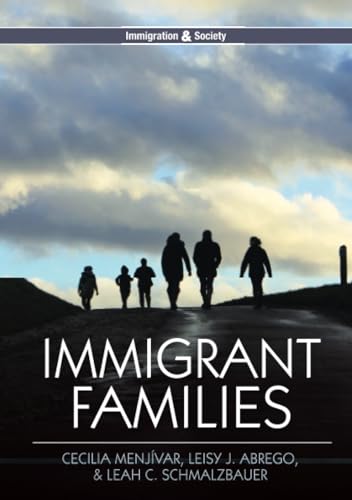
Immigrant Families aims to capture the richness, complexity, and diversity that characterize contemporary immigrant families in the United States. In doing so, it reaffirms that the vast majority of people do not migrate as isolated individuals, but are members of families. There is no quintessential immigrant experience, as immigrants and their families arrive with different levels of economic, social, and cultural resources, and must navigate various social structures that shape how they fare. Immigrant Families highlights the hierarchies and inequities between and within immigrant families created by key axes of inequality such as legal status, social class, gender, and generation. Drawing on ethnographic, demographic, and historical scholarship, the authors highlight the transnational context in which many contemporary immigrant families live, exploring how families navigate care, resources, expectations, and aspirations across borders. Ultimately, the book analyzes how dynamics at the individual, family, and community levels shape the life chances and wellbeing of immigrants and their families. As the United States turns its attention to immigration as a critical social issue, Immigrant Families encourages students, scholars, and policy makers to center family in their discussions, thereby prioritizing the human and relational element of human mobility.
There are no comments on this title.