
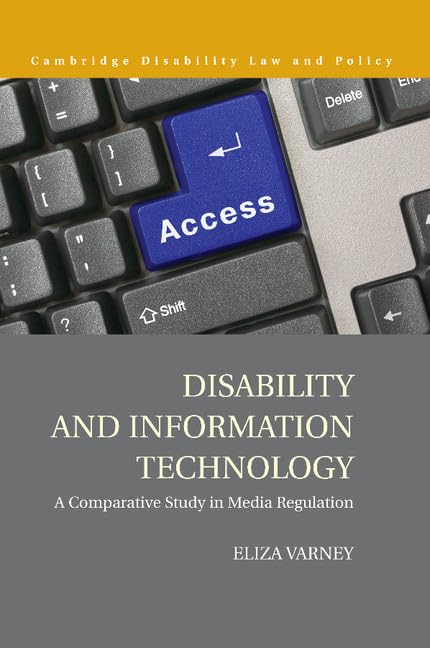
Disability and Information Technology : A Comparative Study in Media Regulation
Publication details: Cambridge University Press 2015Description: 314,ppISBN:- 9781107502895
- 004.087 VAR-D
| Cover image | Item type | Current library | Home library | Collection | Shelving location | Call number | Materials specified | Vol info | URL | Copy number | Status | Notes | Date due | Barcode | Item holds | Item hold queue priority | Course reserves | |
|---|---|---|---|---|---|---|---|---|---|---|---|---|---|---|---|---|---|---|
 Books
Books
|
NASSDOC Library | 004.087 VAR-D (Browse shelf(Opens below)) | Available | 51498 |
Disability and Information Technology examines the extent to which regulatory frameworks for information and communication technologies (ICTs) safeguard the rights of persons with disabilities as citizenship rights. It adopts a comparative approach focused on four case studies: Canada, the European Union, the United Kingdom and the United States. It focuses on the tension between social and economic values in the regulation of ICTs and calls for a regulatory approach based on a framework of principles that reflects citizenship values. The analysis identifies challenges encountered in the jurisdictions examined and points toward the rights-based approach advanced by the UN Convention on the Rights of Persons with Disabilities as a benchmark in protecting the rights of persons with disabilities to have equal access to information. The research draws on a wealth of resources, including legislation, cases, interviews, consultation documents and responses from organisations representing persons with disabilities. Discusses the right of persons with disabilities to access information as a citizenship right Adopts a comparative approach based on four case studies: Canada, the European Union, the United Kingdom and the United States Examines the extent to which the rights of persons with disabilities are protected in regulatory frameworks for the ICT sector
There are no comments on this title.